Proof or Pixel: What a UK CBD Lab-Report Link Is Really Worth in 2026
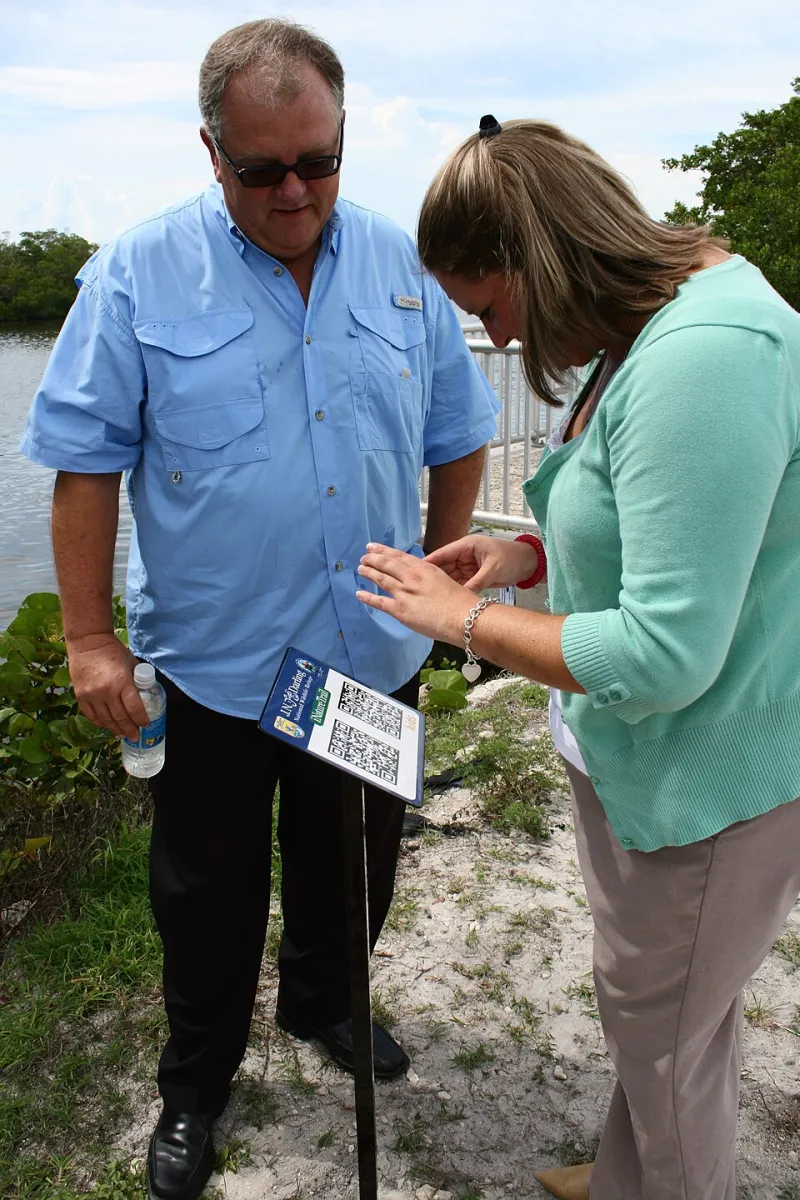
Photo: U.S. Fish and Wildlife Service Headquarters, Public domain, via Wikimedia Commons
Walk down any CBD shelf in 2026 and the packaging has quietly changed shape. Where a paragraph of wellness copy used to sit, there's now a small square of pixels and a line of text that says something like "scan for our lab results". It's a decent instinct. Rather than asking shoppers to take a brand's word for it, the QR code says: go and look for yourself.
So I went and looked. Over a couple of weeks I scanned the codes on around two dozen UK brands, from £12 own-label drops to £70 full-spectrum tinctures, and followed every link to wherever it led. Some were genuinely impressive — clean PDFs, named laboratories, batch numbers that matched the base of the bottle. Others were less a paper trail and more a shrug.
The useful conclusion isn't "QR codes are a gimmick". It's that a lab-report link is only as good as the three or four details inside it, and those details take about a minute to check.
What a scan is supposed to prove
A certificate of analysis — a CoA, in the trade's shorthand — is a laboratory's record of what it found in a specific sample. When it's done properly, it answers a short list of questions: which lab ran the test, whether that lab is accredited, which production batch the sample came from, when it was tested, what cannabinoids were present and at what strength, how much THC was detected, and whether the sample passed checks for heavy metals, pesticides, solvents, mycotoxins and microbiology.
That's the ideal. In practice, what you get after a scan sits somewhere on a wide spectrum between "full documentation" and "a logo and a promise".
The batch number is the whole ball game
If you only check one thing, check this. Every CBD product is made in batches, and the batch or lot code should be printed on the bottle — often on the base, sometimes on the side of the label near the best-before date. The CoA behind the QR code should carry that same code.
When it does, the report is genuinely about your bottle. When it doesn't, you're reading about somebody's bottle, possibly from a different season, possibly from a different recipe. I found all three of the usual variations:
- A CoA with an exact batch match, dated within the last year. This is the gold standard and, encouragingly, more common than it was a few years ago.
- A general "lab results" page showing the most recent CoA for the product line, with no way to tell whether it covers the bottle in your hand.
- A PDF with the batch field left blank, or filled in with something that doesn't appear anywhere on the packaging.
The third category is the one to treat with suspicion. It isn't necessarily dishonest — batch codes get reformatted between systems — but if you can't join the dots, the report can't do the job you scanned it for.
Where the links go dead
A surprising number of codes simply don't arrive anywhere useful. Over the fortnight I collected a 404 error, a link to a brand's Instagram grid, a Google Drive folder that required permission to open, and one code that redirected to a newsletter sign-up page. Another led to a scanned image so heavily compressed that the cannabinoid column was unreadable at any zoom level.
None of these are scandals. They are, however, a fair signal of how much attention a brand pays to the boring parts of running a supplements business — and boring parts are usually where quality control lives.
Reading the numbers like a shopper, not a chemist
You don't need a biochemistry background to get value out of a CoA. You need a calculator and one habit: convert everything to milligrams.
Labels talk in percentages because percentages sound bigger. A "10% CBD" bottle is 10% by volume, so a 10 ml bottle holds roughly 1,000 mg of cannabinoids. A 30 ml bottle at the same strength holds about 3,000 mg. Same percentage, three times the contents, and often not three times the price.
The CoA lets you go one step further and check what was actually measured. Two things trip people up:
- Total cannabinoids versus CBD. Some reports list CBD, CBDA, CBG and others separately, then give a total. A bottle marketed at 10% might test at 8.6% CBD plus 1.2% CBDA. Both numbers are honest; only one is the figure the label is trading on.
- The limit of detection. A THC result of "nd" (not detected) means very little unless the report states the threshold it was tested against. Good labs print it.
Once you have a milligram figure you trust, divide the price by it. That's your real cost per milligram, and it's the only number that lets you compare two bottles fairly.
The gaps that turn a report into decoration
A CoA can look official and still tell you almost nothing. The recurring gaps I came across:
- No test date, or a date that predates the batch it's attached to.
- No lab name beyond a logo, or no indication of accreditation. In the UK, look for UKAS-accredited testing where possible.
- A cannabinoid panel only. No heavy metals, pesticides or microbiological results, which are the checks most relevant to a product you're swallowing daily.
- A "representative" report — tested once, applied to every future batch. Common, and not automatically a problem, but it should be labelled as such rather than presented as batch-specific.
- A report for a sample the brand sent in, with no chain of custody. Again, standard practice for smaller brands, but worth knowing what you're looking at.
Turning a CoA into a price-per-milligram check
Here's where the scanning habit earns its keep. Take a 10 ml bottle labelled 10% and priced at £35. On the label's claim that's 1,000 mg, so £0.035 per milligram. If the matching CoA shows 8.6% total cannabinoids, the honest figure is 860 mg — £0.041 per milligram. On a monthly bottle, that gap is roughly £70 a year for the same headline product.
Now compare it with a 30 ml bottle at £60 whose CoA matches its batch and shows 2,900 mg. That works out at about £0.021 per milligram, and you have documentation to back it. Same shelf, similar marketing language, half the real cost.
The flip side matters too. If a brand's CoA can't be tied to your bottle, you're not comparing verified numbers — you're comparing claims. That doesn't make the product bad, but it should make you cautious about paying a premium for it.
A short checklist before you check out
- Scan the code and note the batch printed on the bottle.
- Confirm the CoA carries the same batch code.
- Check the test date — ideally within the last 12 to 18 months and after the batch was made.
- Look for a named laboratory, and UKAS accreditation if it's there.
- Convert the cannabinoid result to milligrams and divide by the price.
- Check that THC is stated alongside the detection limit.
- Make sure a contaminants panel exists, not just cannabinoids.
- Be wary of links that demand an email address before showing results.
A QR code isn't proof of anything on its own. It's an invitation to check, and the brands that treat it as a proper filing cabinet rather than a compliance ornament tend to be the ones whose cost per milligram holds up. Scan, match the batch, do the division — then decide whether the price still looks like value.