Familiar Logo, Unfamiliar Maths: The UK Own-Label CBD Shelf Audit
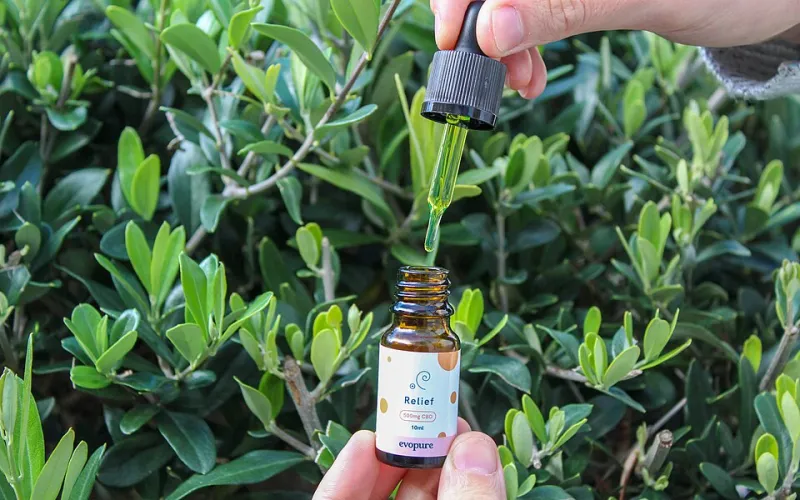
Photo: Evopure, CC BY-SA 2.0, via Wikimedia Commons
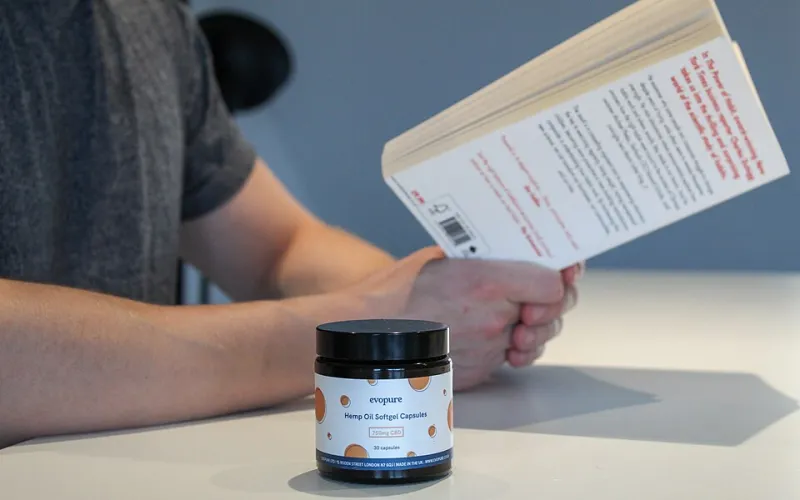
There's a particular moment in a UK health chain or supermarket aisle where the own-label CBD bottle catches your eye. It's sat at waist height, next to a brand with a bigger marketing budget and a bolder font, and it costs somewhere between eight and fifteen pounds less. The logic feels airtight: same shop, same shelf, fewer middlemen, better price. Job done.
Except the shelf is very good at making that logic feel finished when it isn't. Own-label CBD is a genuinely strong value play in some parts of the range and a fairly ordinary one in others, and the difference is almost never printed on the front of the box. So let's do the dull bit properly.
First, what "own-label" actually means here
A retailer almost never makes its own CBD. The bottle is produced by a third-party manufacturer — often the same white-label outfit that fills branded bottles for other companies — to a spec the retailer has signed off. Sometimes the retailer has asked for the same fill in cheaper packaging. Sometimes it has asked for a lower-strength fill, a different carrier oil, or a smaller bottle to hit a price point.
None of that is dodgy. It's just retail. But it does mean the logo tells you who is selling the product, not who made it, and definitely not what's in it. The only way to know whether the own-label bottle is the bargain it appears to be is to do the same per-milligram maths you'd do for any brand.
The milligram maths, done on the actual shelf
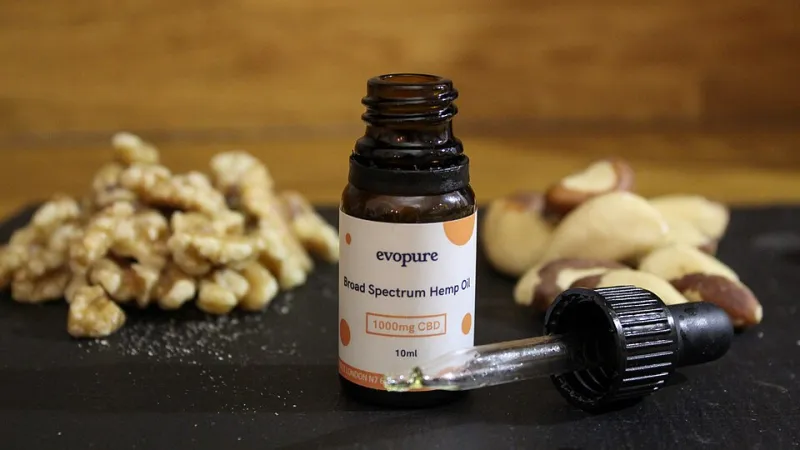
Cost per milligram is total price divided by total milligrams in the bottle. That's it. It's the only number that lets you compare a 10ml 1,000mg own-label bottle against a 30ml 1,500mg branded one without your brain quietly giving up.
Here's a typical-looking virtual shelf, with prices rounded for illustration:
- Own-label 10ml, 1,000mg — £24.99 — 2.5p per mg
- Branded 10ml, 1,000mg — £38.00 — 3.8p per mg
- Own-label 10ml, 500mg "gentle" — £19.99 — 4.0p per mg
- Branded 10ml, 500mg — £26.50 — 5.3p per mg
- Own-label 10ml, 300mg "starter" — £14.99 — 5.0p per mg
Look at that third line again. The own-label 500mg is more expensive per milligram than the branded 1,000mg two lines above it. That's not a scandal — smaller bottles always cost more per milligram, because you're paying for glass, dropper, label, box and postage spread across fewer milligrams. But it is exactly where the house-brand halo does the most unearned work. The customer sees "own brand" and assumes value, when the maths says otherwise.
Where own-label genuinely wins
At the top of the range, own-label is often a real bargain. The retailer isn't paying for influencer campaigns, a subscription platform nobody uses, or a limited-edition tin. A 1,000mg or 2,000mg own-label bottle in plain packaging frequently lands two to four pence per milligram below a comparable branded product. If you've settled on a strength and a carrier oil you like, that's a straightforward, defensible saving.
Own-label ranges also tend to be shorter. Fewer SKUs, fewer "gold" and "ultra" tiers, fewer reasons to stand in the aisle doing long division. There's a lot to be said for a range that doesn't need a flowchart.
Where the halo slips: rotation and batch dates
Here's the quiet catch. Big branded products with heavy marketing tend to sell through quickly. Own-label bottles in smaller branches can sit on the shelf for months, and the shop assistant restocking them is not necessarily checking the batch date.
Before you buy, find the batch number and the best-before date. If neither is visible without opening the box, ask. If the staff can't tell you, that's information too. A 2024 batch on a 2026 shelf isn't automatically unsafe — CBD doesn't go off like milk — but it does mean you're buying older stock at a price that hasn't been marked down. Branded products aren't immune to this either. It's a shelf problem, not an own-label problem, and it's worth two minutes of your time.
The QR code test
Scan the lab-report link on the box, then check three things: does the page load, does the batch number on the certificate match the batch number on your bottle, and does the certificate show a cannabinoid breakdown rather than a single CBD figure?
Own-label products sometimes link to a generic brand landing page rather than a batch-specific certificate. That's a soft fail. Branded products do exactly the same thing, and some premium-priced ones still have dead links in 2026, so this isn't about picking on retailers. It's about the fact that a QR code is only worth the batch it matches.
The cannabinoid question
If the bottle says "full spectrum", the certificate should show more than CBD — at least a CBDA or CBG figure, and ideally a short table. If it shows CBD and nothing else, you're probably holding an isolate or a broad-spectrum product with the label doing a bit of hopeful marketing. That's not a dealbreaker, but it changes the value calculation. A full-spectrum premium isn't a premium if the spectrum isn't there.
While you're at it, check the volume. Some own-label lines have quietly moved from 10ml to 9ml, or swapped MCT oil for hemp seed oil, without changing the front-of-pack price. Neither is unlawful. Both shift the maths.
A five-minute shelf check
- Work out pence per milligram on the big bottle and the small bottle.
- Find the batch and best-before date.
- Scan the QR code and confirm the batch matches.
- Look for a cannabinoid breakdown, not just a CBD total.
- Check volume and carrier oil before you get to the till.
The verdict
Own-label CBD is a genuine bargain when three things line up: a high-milligram bottle, a recent batch, and a batch-matched lab report showing what's actually in it. It's a halo trap when the bottle is small, the certificate is generic, and the date is a bit dusty.
The retailer's logo is not a quality mark — it's a shop sign. Buy the maths, not the branding, and the own-label shelf will treat you well about half the time and quietly mug you off the other half.