The Serial Switcher's Spreadsheet: What a New UK CBD Brand Every Month Really Adds to Your Milligram Bill
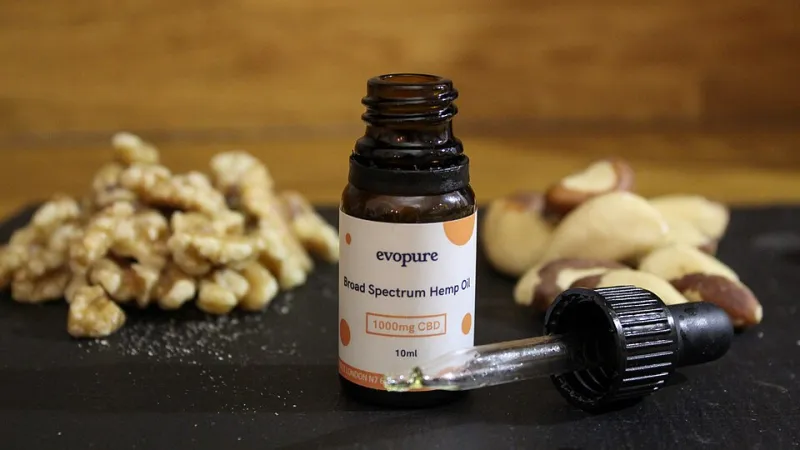
Photo: Evopure, CC BY 2.0, via Wikimedia Commons
There is a particular kind of UK CBD shopper who never pays full price twice. One month it is Brand A's 25% welcome code, the next it is Brand B's free-delivery offer, then Brand C's bundle that looks cheaper until you read the small print. On paper, the savings look obvious. In the basket, they are often much smaller than the discount banner suggests.
This is not an argument for blind loyalty. It is an argument for doing the maths on brand-hopping the same way you would on any other repeat purchase. As of November 2026, with UK CBD shelves crowded and intro offers everywhere, the serial switcher needs a spreadsheet more than a shopping habit.
First, the number that matters
Ignore the percentage off the sticker. The only figure that lets you compare one bottle with another is cost per milligram, after delivery. That means total paid divided by total CBD in the bottle. A £30 bottle of 1,000mg oil is 3p per milligram before postage. Add £3.95 delivery and it becomes 3.4p per milligram. That is the number to put in column one.
The second number is milligrams per drop. It tells you whether the bottle will actually last the month at your usual dose. A 10ml bottle with a 0.05ml dropper and 1,000mg of CBD is roughly 5mg per drop. A 30ml bottle with 1,500mg and a different dropper can be closer to 2.5mg per drop. Same category, very different routine.
A realistic £40-a-month hop, month by month
Let us take a shopper with a £40 monthly budget and a target of roughly 1,000mg. Their loyal baseline is a 10ml, 1,000mg bottle at £38 with free delivery. That is 3.8p per milligram.
Now the hop:
| Month | Offer in the basket | Total paid | Cost per mg | Apparent saving vs baseline | Realistic friction | Net saving |
|---|---|---|---|---|---|---|
| 1 | Brand A intro: £30 plus £3.95 delivery | £33.95 | 3.4p | £4.05 | £1.70 of dose recalibration and a partly used bottle | £2.35 |
| 2 | Brand B intro: £28 plus £4.50 delivery | £32.50 | 3.25p | £5.50 | £3.25 from a different dropper and a week of guessing | £2.25 |
| 3 | Brand C intro: £31 plus £3.95 delivery | £34.95 | 3.5p | £3.05 | £2.80 from a weaker batch date and a rushed reorder | £0.25 |
| 4 | Brand D intro: £29 plus £4.95 delivery | £33.95 | 3.4p | £4.05 | £2.50 from another new bottle and another new routine | £1.55 |
Four months of hopping produces a theoretical saving of £16.65 before friction. After realistic friction, it is closer to £6.40. That is not nothing, but it is roughly £1.60 a month — and it assumes every intro code works, every bottle arrives on time and nothing is wasted.
The full-price hangover
Most intro codes are one per household, one per email or one per first order. The serial switcher avoids the full-price repeat by moving to another brand. That works until the rotation runs out, or until a favourite brand brings back the formula you liked and you want to stay.
This is where the monthly hop quietly loses its shine. If Brand B's repeat price is £38.50 and you are used to paying £32.50, the gap is £6. If Brand C's repeat price is £36 but delivery is £3.95 because you are under the free-delivery threshold, the gap is wider still. The hopper has trained themselves to expect an introductory price that was never designed to last.
There is also the loyalty point nobody counts. A shopper who stays with one brand may get a reward scheme, a repeat-order discount or a familiar batch. A shopper who rotates every four weeks is always the new customer, never the known one. That is fine if the intro price is genuinely better. It is less fine if the “saving” is only £2 and you have spent 40 minutes comparing checkout pages.
Dropper drift and label variance
Every brand labels its oil slightly differently. Some quote CBD per bottle, some per ml, some per drop. Some use a 0.05ml dropper, some 0.04ml, some a pump. A switch that looks like a like-for-like swap can change your daily dose without you noticing.
If you take 20mg a day, a 1,000mg bottle lasts 50 days in theory. In practice, a new dropper and a new carrier oil can push you to take an extra drop or two while you adjust. That is not a disaster, but it is a cost. The same goes for label variance around full-spectrum, broad-spectrum and isolate. If you are switching categories as well as brands, you are not really comparing like with like.
Batch dates matter too. A cheap intro bottle can be older stock. It may still be within date, but if you are buying a month at a time, freshness and storage matter more than a 10% code. A bottle that sits in a warm kitchen cupboard for six weeks is not the same value as one you finish in four.
When hopping actually pays
Brand-hopping is not a bad habit by default. It pays when the maths is clean:
- The intro discount is at least 15–20% after delivery, not before.
- You clear the free-delivery threshold without adding a filler you did not need.
- The concentration and dropper are close enough to your usual routine.
- You will finish the bottle before the batch date becomes a question.
- You are not relying on a subscription or a one-use code to make the price work.
- The repeat price is still competitive if you decide to stay.
If two or three of those are missing, the “saving” is usually just a smaller loss. A £2 saving that comes with a new dropper, a postage charge and a bottle you do not love is not a value comparison. It is a small administrative cost with a CBD label on it.
The five-minute audit
Before your next switch, make a simple four-column note: brand, total milligrams, total paid including delivery, and cost per milligram. Add a fifth column for milligrams per drop if the label gives it. Compare that with your current bottle. If the new option is not at least 10% cheaper per milligram after delivery, and you cannot explain why you are switching, stay put.
Keep a “loyalty baseline” too — the best repeat price you can actually get from a brand you trust. That stops you from being dazzled by a welcome code that is only £1.50 better than your normal basket. The goal is not to chase every offer. It is to know which offers are worth the faff.
The verdict
For a £40-a-month UK buyer in 2026, brand-hopping can shave a few pounds off the milligram bill if you do it deliberately. It rarely pays as a monthly reflex. The wins are small, the friction is real and the full-price repeat is always waiting at the end of the rotation.
A better pattern is a short rotation of two or three trusted brands, each with a known cost per milligram and a known dropper. Switch when the maths is clearly better. Stay when it is not. And never let a welcome discount make you forget that the only price that counts is the one you pay for the milligrams that actually reach your routine.