Loyalty or Loose Change? What UK CBD Reward Schemes Really Return on a £40 Repeat Order
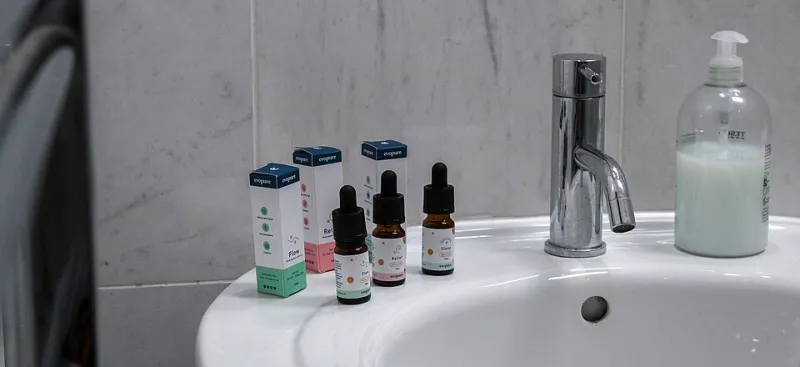
Photo: Evopure, CC BY-SA 2.0, via Wikimedia Commons
Loyalty schemes are the comfort blanket of UK CBD retail. They promise that your third bottle, your fifth order or your friend’s first purchase will somehow make the whole habit cheaper. Sometimes they do. Often they hand back less than the price of a decent coffee — before postage has had its say.
We are not against rewards. We are against reward maths that only works in the brand’s favour. So let’s take a normal shopper: someone buying a £40 CBD oil repeat order every month or two, paying UK prices, and wondering whether the points pile is worth the trouble.
The three schemes you actually meet
Most UK CBD loyalty mechanics fall into a few familiar shapes.
Points per pound. You earn one or two points for every £1 spent, with a conversion rate hiding in the terms. One point per £1 sounds fine until you discover that 100 points equals £1. That is a 1% return. Two points per £1 at 100 points to £1 is 2%. Neither is life-changing.
Sign-up credit. A £5 or £10 voucher for new customers, usually with a minimum spend of £25 to £35 and a short expiry. This is not loyalty; it is acquisition. It also tends to be a one-time hit.
VIP tiers. Spend £150 or £250 in a rolling year and you might unlock free delivery, a slightly bigger discount or early access to drops. The tier name sounds exclusive. The actual benefit can be a 5% code that excludes sale items, bundles and the very products you wanted.
Then there is refer-a-friend: usually a £10 credit for you and a £10 credit for them, once their order clears the minimum. It is the most generous mechanic on paper, but it is not a repeatable discount for the average shopper.
The £40 basket test
Let’s use a £40 basket before postage. That is a realistic UK CBD order: one 10ml bottle, maybe a small balm, or a mid-strength oil on offer.
Scheme A: one point per £1, 100 points = £1
You earn 40 points. That is 40p of future value. If the minimum redemption is 500 points — £5 — you need to spend £500 to cash out. At one £40 order a month, that takes 12.5 months. If the points expire after 12 months, you may never get there. Effective return: somewhere between 0% and 1%, depending on how disciplined you are.
Scheme B: two points per £1, 150 points = £1
You earn 80 points, worth about 53p. If the minimum redemption is 300 points, you need nearly four £40 orders to unlock £2. That is a 1.3% return across those orders. Better than nothing, but not a reason to choose one brand over another.
Scheme C: £5 sign-up credit, £35 minimum spend
Your first £40 order drops to £35. That is a genuine £5 saving — but only once. On the second order, the loyalty value is zero unless the scheme also has points. A first-time buyer who spots a 15% homepage code would save £6 on the same £40 basket. The sign-up credit is not automatically the better deal.
That last point matters. Brands often promote loyalty sign-up rewards more loudly than their standard first-order code. If the code is 15% off with no minimum, it beats a £5 credit on a £35 minimum. Always compare the two before joining anything.
Where the maths gets sneaky
Postage thresholds
Many UK CBD shops offer free delivery at £40. If your basket is exactly £40 and you apply a £2 loyalty reward, the basket falls to £38. Postage of £3.95 reappears. You have saved £2 and paid £3.95 to do it. Net loss: £1.95.
This is the most common loyalty own-goal in UK CBD. The reward is real, but the postage threshold eats it. Either top up to clear the threshold after the discount or save the reward for a bigger basket.
Excluded sale items
Points schemes often exclude reduced lines. If your £40 basket includes £15 of sale stock, you may only earn points on £25. At one point per £1, that is 25p instead of 40p. The brand still gets the full £40. You get a smaller reward because you shopped smartly. Read the exclusions before you assume every pound counts.
Expiry windows
A 90-day expiry is tight for a £40 shopper. A 12-month expiry is more reasonable, but only if the redemption minimum is low. Points that expire before you can redeem them are not a reward; they are a decoration.
VIP tiers and rolling spend
A VIP tier that requires £250 in 12 months sounds achievable until you realise that subscription orders, gift cards and sale items may not count. If you spend £40 every two months, you hit £240 — just short. The tier stays locked, and the free delivery you were chasing never arrives. Check what counts before you chase status.
The referral reality
Refer-a-friend is the one scheme that can genuinely pay. A £10 credit for you and £10 for a friend is a 25% effective discount on a £40 basket — if the friend was going to buy anyway and the credit is not swallowed by exclusions.
But it is not a loyalty scheme in any normal sense. It is a marketing bounty. You cannot refer yourself, the credit usually expires within 90 days, and it often cannot be combined with sale prices. If you have a friend who already buys CBD, split the benefit and treat it as a one-off. Do not build your buying strategy around it.
The CBD Collect verdict
On a £40 repeat order, most UK CBD points schemes return somewhere between 0.5% and 2% — and that is before postage thresholds and exclusions. A good first-order discount code will usually beat a year of points. A refer-a-friend bonus can beat both, but only once.
None of this makes loyalty schemes evil. They are fine if you are already a regular customer and your basket comfortably clears the free-delivery threshold. They become a bad deal when they tempt you into top-up purchases you did not need, or when a £2 reward pushes you below £40 and adds £3.95 postage.
Our advice is simple: join the scheme if it is free, but value the points at 1p each only after you have checked the redemption minimum, the expiry date and the excluded products. Then compare the total against the homepage code a first-time buyer could use. If the loyalty scheme loses, that is not a reward. It is a loyalty tax with a nicer name.