Read the Batch, Not the Blurb: A UK Shopper's Guide to CBD Freshness and Old-Stock Bargains

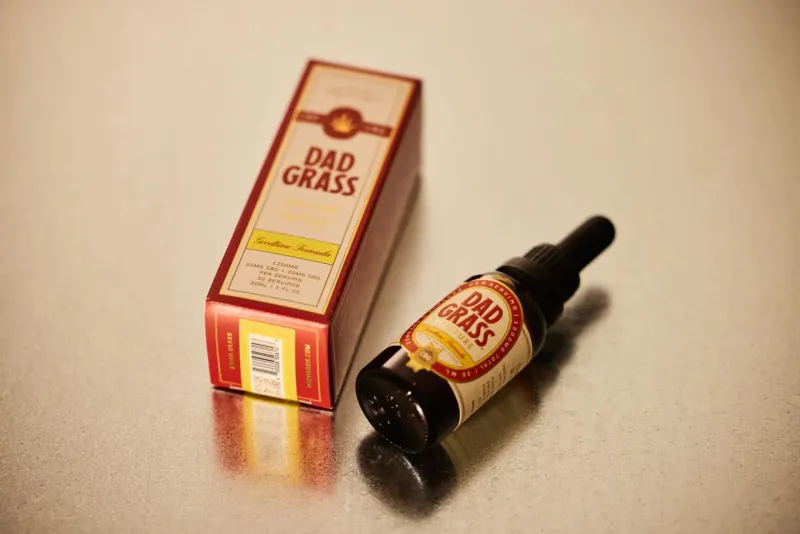
Photo: Patrickroque01, CC BY-SA 4.0, via Wikimedia Commons
A bottle of CBD oil can look immaculate. Clean label, nice typeface, a little leaf motif, a promise about calm evenings. Then you turn it over and find a batch code printed in pale grey on the base, half rubbed away by the cardboard insert. That smudge is often more honest than the front of the label. It tells you when the product was made, or at least when it was packed, and whether the bargain you are holding is genuinely fresh or simply old stock with a new discount sticker.
Why a batch code is more useful than a pretty label
CBD products are not wine. Most oils, gummies and capsules are made to be used within a reasonable window, not aged in a cupboard. The batch code is the brand's internal fingerprint: it links a bottle to a production run, a filling date and a quality check. If something goes wrong, it is how the brand traces the problem. For shoppers, it is a way to ask better questions.
A label can say premium, lab-tested and small-batch without defining any of those words. A batch code is more specific. It does not prove the product is good, but it does prove the brand is keeping records. That is a useful starting point.
How to find and decode a batch code
Start with the obvious places: the base of the bottle, the side of the carton, the crimp of a capsule tub, the back of a gummy pouch, or the fold of a box flap. Codes are often printed in dot-matrix ink, which is why they fade. If you are buying in a shop, ask to see the base before you pay. If you are buying online, ask customer service for the batch code of the stock they are currently sending out. A brand that cannot answer that question is telling you something.
Most codes are not designed for public decoding. They might combine a year, a month, a facility letter and a run number, or they might be a random string. The useful move is not to become a codebreaker. It is to ask the brand two plain questions: what is the production date, and what is the best-before date? If the code is real, they should be able to match it to a record. If the answer is vague, treat the code as decoration.
Best-before dates and the 'see base' problem
UK CBD labels often use BBE, which means best before end. You might see a month and year, a day and month, or a cryptic instruction to see the base. Best-before dates are about quality rather than safety: an oil past its BBE is not automatically dangerous, but it may have lost potency or started to taste stale. For CBD, that matters because you are paying for milligrams, not just for a nice bottle.
Check that the date is actually printed, not just promised on the website. A common trick is to show a fresh-looking date in a product photo while the dispatched stock has a much shorter window. If you order online, ask what date the current batch carries. If the answer is 'we cannot guarantee a specific date', factor that into the price.
Storage advice changes the clock
A best-before date assumes sensible storage. Most CBD oils should be kept cool, dark and tightly capped. A sunny kitchen windowsill is not sensible storage. Gummies can suffer in a warm cupboard or a steamy bathroom. Capsules dislike humidity. If a brand sells a bargain bottle but gives no storage advice, that is a gap.
Be careful with the fridge. A cool, dark place is usually enough. Repeatedly moving an oil in and out of the fridge can create condensation, and water in an oil bottle is not helpful. Follow the brand's own advice, but read it critically. 'Store in a cool, dry place' is fine. 'Store however you like' is not.
Three product types, three freshness risks
Oils are the most obvious. They can oxidise, lose aroma and taste tired. A darkened or oddly thick oil is not a bargain. Gummies have a different problem: sugar and moisture. A sticky, clumped gummy is not necessarily unsafe, but it is not fresh either. Capsules can absorb moisture and soften. None of these are reasons to panic, but they are reasons to check the date before you buy a bulk pack.
Strength matters too. A 1,000 mg oil that is six months from its best-before date may still be fine if you use it quickly. The same bottle may be poor value if you plan to take one drop a day for a year. Match the bottle size to your actual use, not to the discount.
The old-stock bargain test
A bargain bottle is only a bargain if the price per milligram is low and the freshness window is long enough. Do the maths. If a 500 mg oil is reduced from £30 to £18 but has a best-before date two months away, it is 3.6p per milligram with a short runway. A full-price 500 mg oil at £25 with a year to run is 5p per milligram but gives you far more usable time. The cheaper bottle is not automatically the better buy.
Ask for the batch code and the best-before date before ordering. If the brand will not provide them, walk away. If the code is only on the outer box and you plan to decant the oil, photograph it first. Keep the box or write the date on the bottle. That way you are not guessing in six months.
A five-minute freshness check
- Find the batch code on the bottle, box or pouch.
- Ask the brand for the production date and best-before date.
- Check whether the website photo matches the date on current stock.
- Calculate price per milligram, not just price per bottle.
- Match the bottle size to how quickly you will use it.
- Follow storage advice, but avoid steamy bathrooms and sunny windowsills.
- Photograph the batch code before you recycle the packaging.
CBD Collect's view is simple: freshness is part of value. A brand that is upfront about batch codes and dates is easier to trust than one that hides behind a moody photo and a slogan. The label can promise a lot. The batch code can at least tell you when the clock started.