Counter Culture: What the UK High Street CBD Premium Buys You in 2026
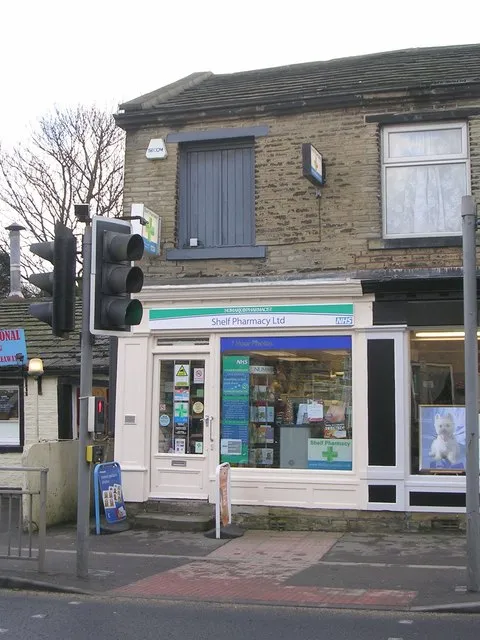
Photo: Betty Longbottom, CC BY-SA 2.0, via Wikimedia Commons
There is a certain comfort in buying CBD from a shop you can walk into. You can pick up the bottle, turn it over, squint at the label and ask a real person behind a counter what the difference is between two products that look almost identical. That comfort is not free. In 2026, the UK high street CBD premium is real, and it is often larger than shoppers assume.
But is it worth it? That depends on what the extra money actually buys. To find out, we looked at matched-potency products — a 10% CBD oil in a 10ml bottle and a 300mg gummy pack — sold through UK high street chains and health shops, and compared them with similar products from online-only brands. This is not a full market survey; think of it as a shopper's audit. Prices move, promotions come and go, and own-label ranges differ by branch. Still, the pattern is clear enough to be useful.
The premium is real, but it is not one number
On the shelf, a 10ml bottle of 10% CBD oil — that's 1,000mg of CBD — commonly lands somewhere between £29.99 and £39.99 in a UK pharmacy or health chain. Online-only brands often sell comparable 1,000mg oils for £18 to £27, with the occasional subscription or bundle price dipping lower. Gummies follow a similar script: a 300mg pack might be £22 to £30 on the high street and £15 to £22 online.
That sounds like a big gap, and sometimes it is. But the headline price is not the whole story. Delivery charges can wipe out a chunk of the online saving, especially on a single bottle. High street shops also run loyalty cards, multibuys and clearance shelves. And if you need CBD today, paying a few pounds more at the till beats waiting for a courier.
The more honest way to compare is per milligram of CBD, after postage, and with the same product type in mind. A £34.99 high street oil works out at about 3.5p per mg. A £22 online oil is roughly 2.2p per mg. That is a meaningful difference — around £13 on a single bottle — but it is not always the 50% gulf that shelf prices suggest once delivery is added.
What the extra money pays for: rent, staff and a refund desk
Physical retail is expensive. Rates, rent, lighting, staffing, card fees and the cost of holding stock all go somewhere, and that somewhere is usually the price tag. When you buy from a high street shop, you are partly paying for availability. The product is there, now, and someone has taken the risk of stocking it.
That can be genuinely valuable. A good independent health shop or a well-run pharmacy counter can explain the difference between full-spectrum and isolate, remind you to check the batch code, and tell you whether a product can be returned. If the staff actually know their stuff, the premium starts to look less like a surcharge and more like a service fee.
The trouble is that this knowledge is inconsistent. In some chains, CBD is just another SKU in a cabinet, and the person on duty may know less than the average shopper who has spent ten minutes on a brand's website. When that happens, you are not paying for expertise. You are paying for shelf space, packaging and the vague halo of buying health products in a shop. That is the theatre bit.
Label transparency: the channel is not the proof
One assumption worth challenging is that high street automatically means safer or more transparent. It doesn't. A shop address is not a lab report. Some high street brands publish batch-specific certificates of analysis (COAs) via a QR code on the pack; some online-only brands do the same, and some do it better. Equally, there are high street products with vague labels and online products with clear ones.
What matters is the information on the pack and behind it. Can you see the total CBD content in milligrams? Is there a batch number? Does the brand publish a COA for that batch, showing cannabinoid content and contaminant testing? Is there a clear best-before or manufacture date? Those questions apply whether you are standing in a shop or clicking 'add to basket'.
The high street does have one small advantage here: you can inspect the pack before you pay. You can check the batch code, the expiry date and the label wording in your hand. Online, you are relying on product photos and hope. That is worth something, especially if you have been burned by old stock before.
Freshness and batch reports: check before you commit
CBD products are not wine. Fresher is generally better, and stock that has been sitting near a sunny window for a year is not ideal. Online-only brands often sell faster because they hold less stock and ship direct, but that is a generalisation. High street shelves can move quickly too, especially in busy branches.
If you are buying in person, use the advantage. Ask to see the batch code. Check the date. If the packaging has a QR code, scan it there and then. If it doesn't, ask why. A shop that cannot or will not help with batch information is giving you a useful answer, even if it is not the one it intended.
Returns policies: the quiet advantage of the till
Returns are where the high street can genuinely win. UK distance-selling rules give online shoppers a 14-day cooling-off period, but that usually applies only to unopened products. Once a CBD oil bottle is opened, many online brands will not accept it back unless it is faulty. A few offer satisfaction guarantees, but you need to read the small print.
In a shop, the same general rule applies — opened health products are often non-returnable — but you have a person to negotiate with. If a product is faulty, or the packaging was damaged, or you were sold the wrong strength, a face-to-face conversation can get things sorted quickly. Some shops are more flexible than their websites. Some are not. It is worth asking before you pay.
Convenience versus choice
The high street wins on speed and certainty. You walk in, you walk out, you have the product. No delivery window, no missed postie, no cardboard box. For anyone who has run out mid-week or wants to try a product before committing to a full online order, that is a real benefit.
Online wins on range and price transparency. You can compare per-milligram costs across dozens of brands in a few minutes, read reviews, and often find batch reports linked directly from the product page. The trade-off is waiting, and occasionally paying for delivery. If you are restocking a product you already trust, the online saving is usually the smarter move.
When paying more at the till is justified
There are legitimate reasons to swallow the shelf premium:
- You need CBD today and cannot wait for delivery.
- You want to inspect the batch code, expiry date and packaging before buying.
- The shop staff can actually answer questions about strength, carrier oil and testing.
- The price difference is small once postage is factored in.
- The shop offers a straightforward returns or exchange policy.
- You are buying from a local independent and value keeping that shop open.
None of those reasons are silly. Convenience and confidence have value.
When it is just shelf-space theatre
Paying more is harder to justify when:
- The exact same brand and product is cheaper online, with a batch report, and delivery is free.
- The high street product has no visible batch code or COA.
- The premium seems to be attached to vague 'pharmacy-grade' wording rather than extra testing.
- Staff cannot explain the difference between two products beyond the price.
- The product is close to its expiry date and there is no discount.
That is when the extra money stops buying service and starts buying decoration.
A five-minute shelf checklist
Before you hand over your card, do this:
- Flip the pack and find the total CBD in milligrams. Ignore percentage alone.
- Look for a batch number and a best-before date.
- Scan any QR code and see if it leads to a batch-specific COA.
- Calculate the price per milligram and compare it with a like-for-like online product on your phone.
- Ask about returns before you pay, not after.
The verdict
In 2026, the UK high street CBD premium is not automatically a con, and it is not automatically a guarantee. A 10–20% premium for immediate availability, a chance to inspect the pack and a helpful human being is often money well spent. A 40–50% premium for the same product with no extra transparency is harder to defend.
The smart approach is to buy the product, not the shelf. Judge the label, the batch report and the price per milligram first — then decide whether the shop floor is worth the extra. Sometimes it is. Sometimes it is just nice lighting and a tidy display. At CBD Collect, we would rather you knew which was which.