Postage Maths: Why the Cheapest UK CBD Bottle Rarely Wins at Checkout
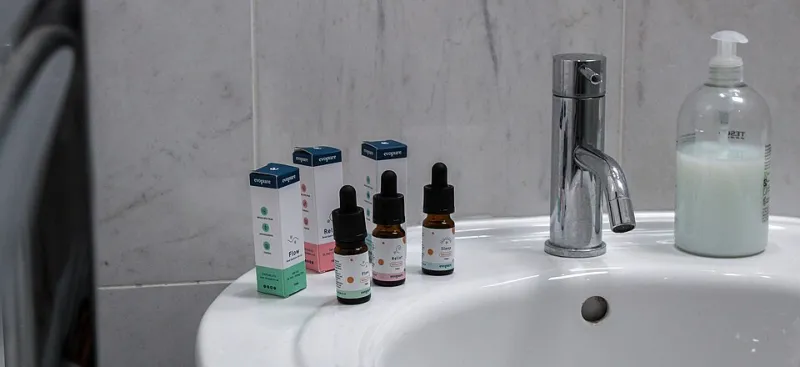
Photo: Evopure, CC BY-SA 2.0, via Wikimedia Commons
Free delivery is a lovely phrase. It is also a phrase that often means the postage has been folded into the sticker price, the threshold has been nudged up, or the minimum order has been set just above the size of basket you actually wanted. At CBD Collect we spend a lot of time looking at price per milligram, but the checkout is where that number can quietly fall apart.
So let's do the boring bit properly. Below is a basket-level audit of how UK CBD delivery fees, free-post thresholds and minimum order values change the value story in 2026. The retailers are anonymised because the point is not to shame one shop. The point is to show the maths you can run before you pay.
The only number that matters at checkout
Price per milligram should be calculated after every unavoidable cost: product, delivery and any small-order fee. If you have to add a filler item to reach a threshold, that filler counts too. A £15 bottle with £4 postage is not a £15 bottle. It is a £19 bottle, and the milligram maths should reflect that.
This sounds obvious. It is also the step most of us skip when we are buying on a phone, in a hurry, with a discount code burning a hole in our pocket.
Order one: the single-bottle test
Start with the simplest basket: one bottle, nothing else.
Retailer A sells a 500 mg oil for £14.99, but delivery is £3.95. The real checkout price is £18.94. That works out at roughly 3.79p per milligram.
Retailer B sells a comparable 500 mg oil for £17.50 with free delivery. The checkout price is £17.50, or 3.50p per milligram.
On the shelf, Retailer A looks £2.51 cheaper. At the checkout, Retailer B is £1.44 cheaper and delivers more milligrams per pound. This is the classic single-bottle trap: the lower sticker price is not the lower basket price.
That does not mean the £14.99 bottle is bad value. It might be the exact product you want. But if you are comparing two similar oils, the postage line has to be part of the comparison, not an afterthought.
Order two: the two-product basket
Things get more interesting when you add a second item. This is where free-delivery thresholds start doing quiet work on your basket.
Imagine Retailer C. You put a 500 mg oil at £14.99 and a 500 mg capsule pack at £15.99 in the basket. The subtotal is £30.98. Delivery is £4.95 because you are under the £35 free-post threshold. Total: £35.93 for 1,000 mg, or about 3.59p per milligram.
Now Retailer D. The oil is £16.49 and the capsules are £17.99. The subtotal is £34.48, which clears its £30 free-delivery threshold. Total: £34.48 for 1,000 mg, or about 3.45p per milligram.
Retailer D is more expensive on both products. It still wins the basket by £1.45 and about 0.14p per milligram. This is the scenario worth remembering: paying more for the product can beat a cheaper item with add-on postage, provided the free-delivery threshold is genuinely met and you were going to buy both items anyway.
The caveat is important. If you only wanted the oil, adding capsules to hit a threshold is not a saving. It is a second purchase wearing a delivery discount as a disguise.
Order three: the bulk buy
Bulk buys usually clear free-delivery thresholds, so sticker price tends to take over again. But not always.
Retailer E sells three 1,000 mg oils at £22 each. Subtotal: £66. Delivery: £4.95. Total: £70.95 for 3,000 mg, or about 2.37p per milligram.
Retailer F sells three 1,000 mg oils at £24 each with free delivery over £50. Total: £72 for 3,000 mg, or 2.40p per milligram.
Retailer E still wins, but only just. The gap is £1.05 across the whole order. If Retailer E had charged £5.95 for postage, or if Retailer F had priced its oils at £23.50, the free-delivery option would have taken the lead.
That is the bulk-buy lesson for 2026: a free-post threshold can erase a small sticker-price advantage, especially on three-bottle orders where the difference between retailers is only a pound or two per bottle. Always compare the final basket, not the product page.
Minimum order values are a different trap
Free-delivery thresholds get the attention, but minimum order values deserve a mention too. A shop that will not process an order below £20 is not necessarily bad value. It is simply telling you something about its business model.
Where it becomes a value problem is when the minimum order pushes you into buying more than you need. A £18 bottle plus £3.95 postage is £21.95. If the same shop has a £25 minimum order, you might add a £7 lip balm to reach it. Suddenly you have spent £25, bought an extra product and saved nothing at all compared with paying the postage elsewhere.
That is not a scandal. It is just a reminder that minimum order values are a basket design tool. They shape what you buy, not just what you pay.
The postcode and parcel-size asterisks
Delivery charges are not always uniform across the UK. Some retailers add surcharges for the Highlands, islands or Northern Ireland, and some exclude those postcodes from free-delivery promises altogether. Parcel size can matter too: a single oil may travel as a large letter, while three bottles and a tub of balm may attract a small-parcel rate.
Click-and-collect can change the maths if you have a nearby stockist, but it is not a universal fix. The practical move is to check the delivery page before you fall in love with a basket. A free-delivery threshold that excludes your postcode is not a threshold. It is a headline.
Four questions before you pay
- What is the total price after delivery, not before?
- What is the price per milligram after delivery?
- Does the free-delivery threshold require items you actually wanted?
- Is the cheaper product still cheaper once postage, minimum order values and any surcharges are included?
If you answer those four, you will avoid most of the checkout tricks that make UK CBD pricing look simpler than it is. The best basket is not always the one with the lowest product price. It is the one with the lowest real cost for the milligrams you were going to buy anyway.
None of this is medical advice, and none of it guarantees a product will suit you. It is just postage maths. In 2026, that maths is doing more work than ever.